Why Tailored Emission Control Matters in Tobacco Industry
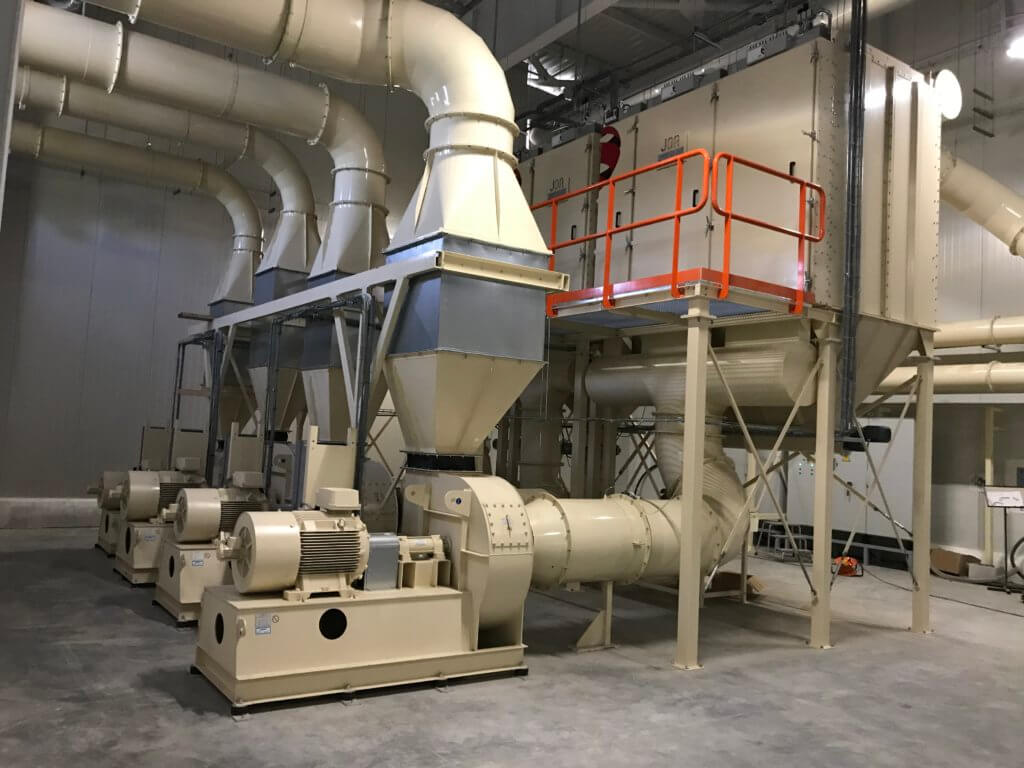
In tobacco manufacturing, variable dust types, adhesive fumes and constant process changes overwhelm off‑the‑shelf extraction systems: leading to clogged filters, uneven airflow, compliance risks and operator safety issues. JOA uses on-site measurements and Air Technical Modeling to tailor both source capture and system balance. This approach prevents fouling and downtime, and delivers ATEX‑compliant, emission‑safe solutions right the first time.
Through data-driven design, thorough implementation and continuous optimization, we ensure your investment delivers lasting gains in:
Safe & Healthy Work Environment
Compliance with latest Legislation
Process Efficiency
Enhanced Product Yield
Waste Heat Recovery
Main challenges in the Tobacco Industry
Tobacco Manufacturing operations face deeply interlinked technical and regulatory challenges that standard equipment alone cannot resolve. Key complexities include:
Fine Dust Emissions: High-temperature and mechanical processes generate hazardous, respirable particulates from both diffuse and point sources, requiring stringent, complex control measures to protect health, ensure compliance, and maintain process efficiency
Conveying Degradation: Due to high air speeds, insufficient product loading, and air leakages. product breaks and degrades. This results in increased dust, lower yield, and product quality issues.
Operator Health & Safety: Inadequate exhaust ventilation and failure to enclose high-risk areas means operators are exposed to airborne pollutants. Open production environments see emission build-up and regular complaints from staff.
Explosion Safety and ATEX Compliance: Fine dust, high temperatures, and mechanical processes create constant ignition risks. Legacy equipment and complex layouts make zoning and compliance demanding, while maintaining safety without disrupting production is a continuous challenge.
Heat Recovery Potential: Recovering low-grade heat is challenging. Often, multiple dispersed sources need to be connected and upgraded to reach the temperature levels required for reuse in industrial processes. This complexity makes efficient heat recovery a demanding task, but one with high potential when done right.
The processes we commonly see when these challenges occur are:
Drying of product
Blending and mixing
Pneumatic conveying
Maker feeding
Packaging
Curing or cutting
Filter attachment
During tobacco processing and manufacturing, a diverse array of airborne contaminants is generated, each presenting unique challenges for process stability, product quality, and worker safety. These include fine tobacco dust and fibrous particles from leaf handling, sticky and condensable organic vapors during curing and fermentation, as well as volatile organic compounds which are commonly produced during high-temperature flue-curing, combustion of fuels, and storage in confined spaces. Below are some of the typical substances encountered within the tobacco industry’s processing environments:
| Fine tobacco dust | Nitrogen oxides (NOx) |
| Fibrous leaf particles | Sulfur oxides (SOx) |
| Sticky organic vapors | Carbon monoxide (CO) |
| Formaldehyde | Ozone (O₃) |
| Acetaldehyde | Hydrogen cyanide (HCN) |
| Nitrosamines | Ammonia (NH₃) |
| Volatile organic compounds (VOCs) | Semi-volatile organic compounds (SVOCs) |
Case Study Tobacco Industry

Recovering 1.2 MW of energy from industrial waste heat at Philip Morris
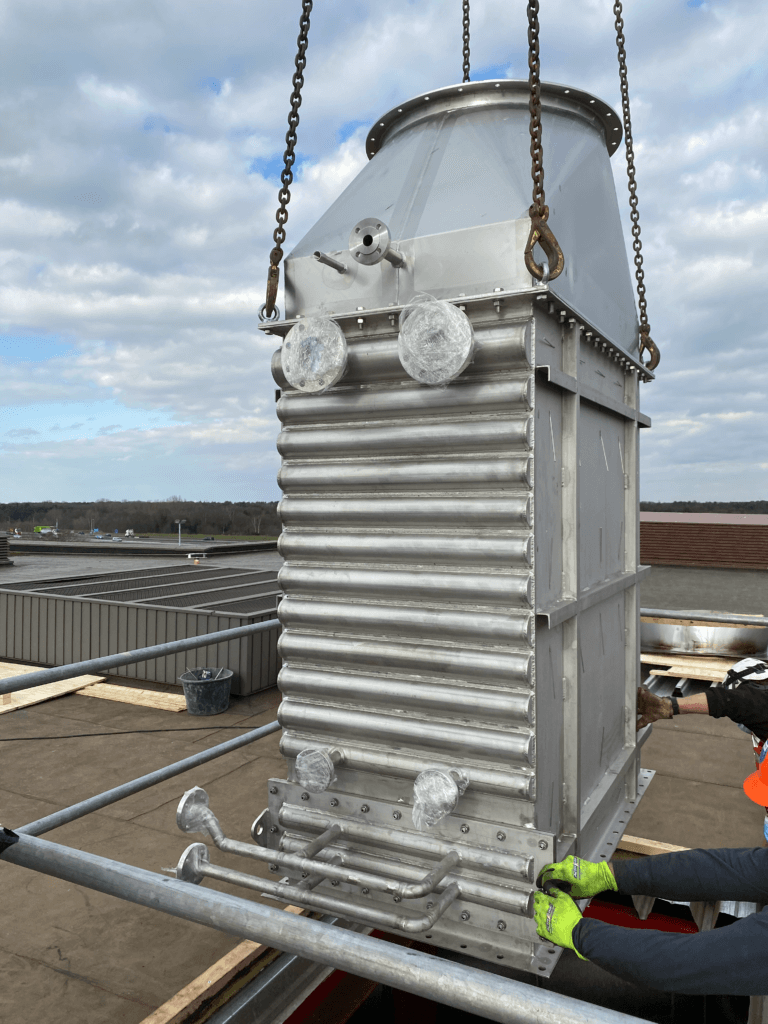
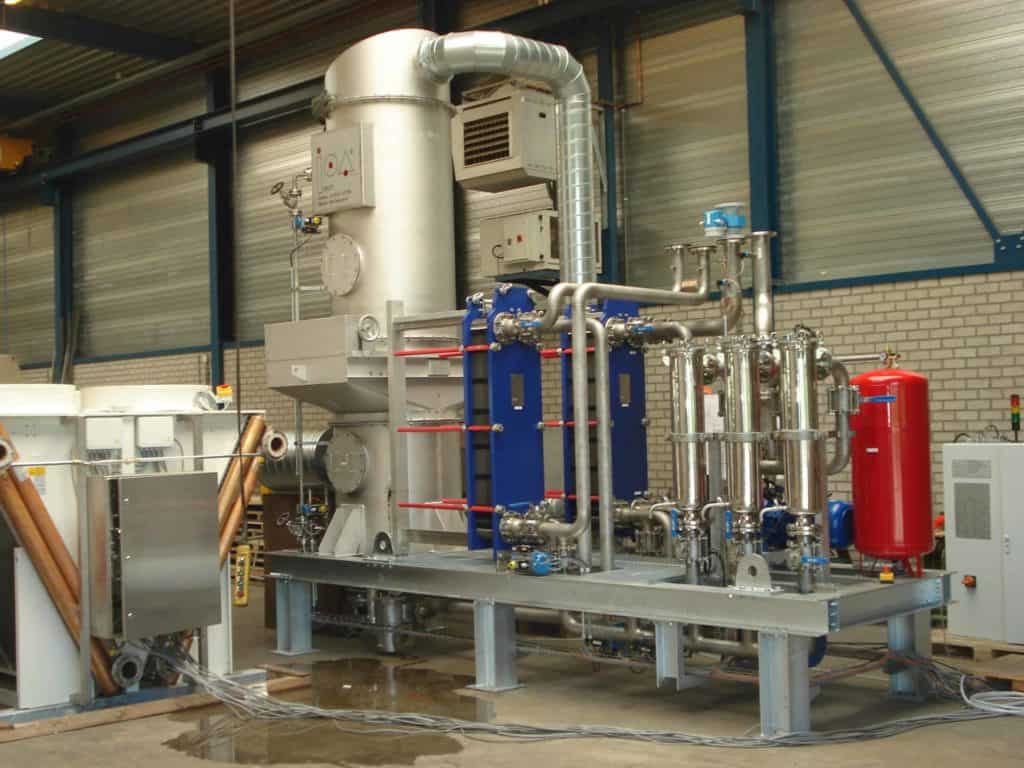
At a Philip Morris International facility, a closed-loop system was implemented to transform waste heat into 1.2 megawatts of usable energy. The setup includes a scrubber, heat exchanger, and two high-efficiency heat pumps. The result: lower emissions, reduced gas demand, and a more sustainable operation.
How does JOA solve Challenges in the Tobacco Industry
Efficient tobacco production demands consistent performance, uptime, and process safety. Reliable extraction of dust, fumes, and heat is essential; not just to protect equipment and maintain product quality, but also to ensure worker safety, prevent dust explosions, and reduce unplanned downtime. Here’s how our proven process supports the complex demands of the tobacco production industry:
Data Collection & Measurements: With a pre-engineering study, we quantify real-world conditions by conducting on-site measurements at key emission points such as leaf handling, cutting, drying, fermentation, conditioning, and pneumatic conveying. These measurements capture actual dust and fiber levels, heat emissions, VOCs, and ATEX-related risks. This provides a solid data foundation for designing effective extraction and air quality control solutions suited to tobacco processing environments.
Consultancy & Design: Leveraging JOA’s Air Technical Modeling (GCM™), we simulate airflow, thermal behavior, and particulate transport within the facility. This helps visualize flow patterns, locate build-up zones, and identify areas prone to vapor condensation, dust accumulation, and ATEX hazards. We design customized extraction solutions with corrosion-resistant, ATEX-compliant materials that align with the specific needs of tobacco processing and manufacturing facilities.
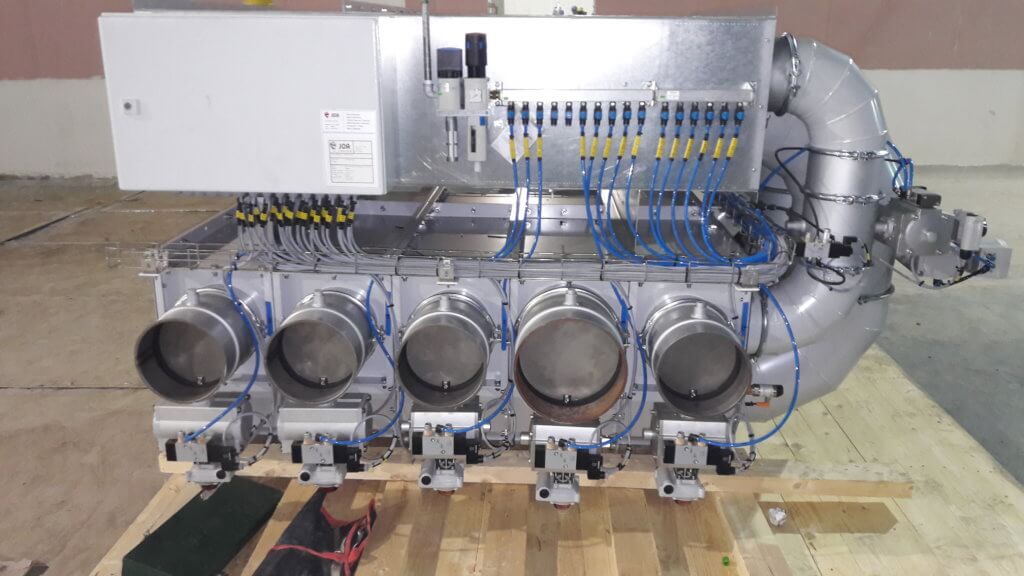
Building & Implementation: System realization includes precision-fabricated units tested through factory acceptance testing (FAT) to ensure performance. Installation is timed to align with plant operations and minimize disruption. Our experienced project managers coordinate every step from installation to commissioning, ensuring a safe, compliant, and efficient startup tailored to the complex challenges of the tobacco industry.

Why JOA is the Right Partner for the Tobacco Industry
By partnering with JOA, tobacco manufacturers achieve industry-leading control over airborne dust, fibers, and emissions; ensuring safer working conditions, minimizing operational risks such as dust explosions and equipment fouling, and safeguarding product quality throughout every stage of production.
Tailor-made Solutions
Developing customized systems that address the unique challenges of each client.
Air Technical Modeling & CFD Analysis
Utilizing advanced computational methods to design efficient emission control systems.
Process Guarantees
Ensuring that implemented solutions meet performance expectations and regulatory requirements.
Extensive Experience
A proven track-record of working with leading companies on complex industrial processes.
In conclusion, effective emission control and dust collection are integral to the success of tobacco manufacturing. JOA’s expertise in providing tailored solutions ensures that companies can maintain clean and efficient operations, meeting the stringent demands of the industry.
Contact us
Share your challenge
Plan a short 30 minute meeting with one of our engineers who have experience with manufacturers worldwide, and start improving your industrial process.
Share details about your challenges
We will review your challenge and plan a meeting
Discuss what is happening at your site
Tobacco Industry FAQ
We use systems designed for high dust loads, selecting filter technology optimized for particle size and adhesion. Anti-static filter media and increased envelope spacing prevent agglomeration and bridging. Multiple extraction points are installed and balanced for stable system operation, with fire suppression (sprinklers and rupture disks) integrated into dust collectors for safety and compliance.
We recommend a multi-stage approach: initial wet scrubbing (Inline Venturi) for sticky and condensable vapors, followed by acid/alkali scrubbing stages for ammonia, nicotine, and organic acids. Automated separators (belt filters) remove particulates from scrubbing water, and high-efficiency droplet separators prevent water carryover to the atmosphere.
Systems are designed using air technical modeling (CFD/GCM) to not only meet current legal and client-specific limits but also accommodate future, stricter standards. All performance criteria are documented and validated pre-commissioning.
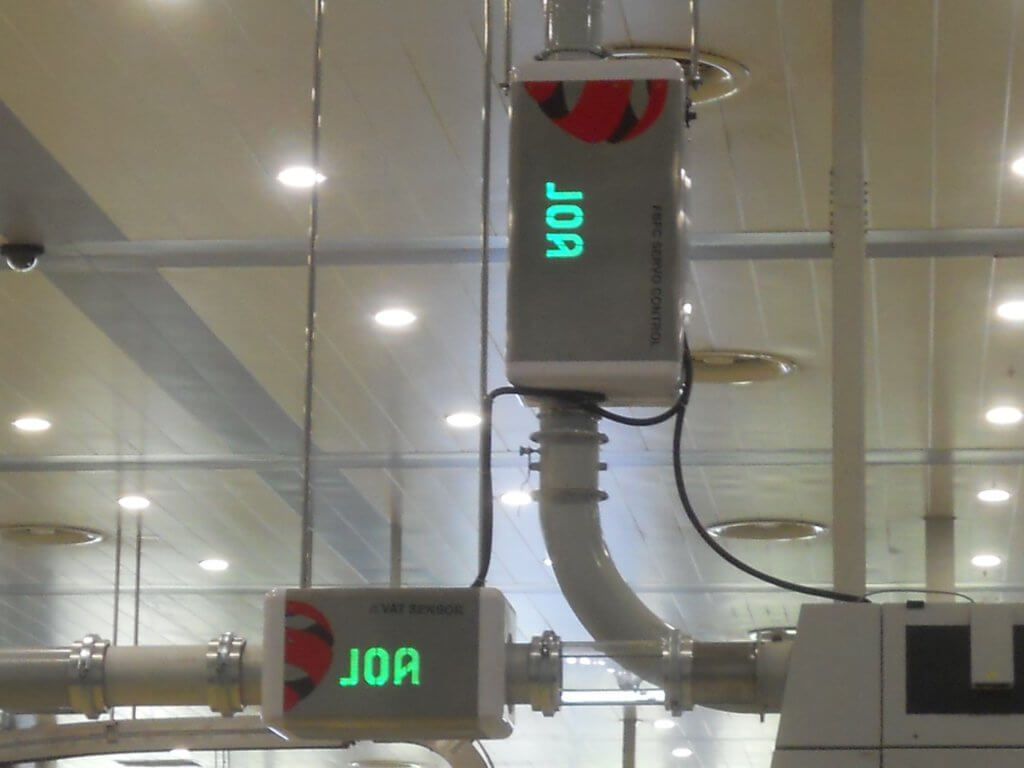
Operator panels (HMI and touchscreens) provide real-time process visuals, automated alarms, and access to operating data logs. The systems can be run manually, automatically, or through SCADA integration, with clear procedures and documentation included.